


 Cr15Al5
 Cr19Al3
 Cr25Al5
 Cr23Al5Ti
 Cr21Al16Nb
 Cr27Al7Mo2
 Cr20Ni80
 Cr30Ni70
 Cr15Ni60
 Inconel 625
 Inconel 718
 Inconel 725
 Inconel X-750
 Inconel 690
 Inconel 617
 Inconel 601
 Inconel 600
 Inconel 686
 Inconel 602CA
 Incoloy A-286
 Incoloy 825
 Incoloy 925
 Incoloy 926
 Incoloy 800
 Incoloy 800H
 Incoloy 800HT
 Incoloy 909
 Incoloy 31
 Incoloy 901
 Monel K-500
 Monel 400
 Nimonic 263
 Nimonic 75
 Nimonic 80A
 Nimonic 90
 Nimonic PE11
 Nimonic PE16
 Nimonic PK33
 Nimonic 901
 Nimonic 81
 Nimonic 86
 Nimonic 105
 Nimonic 115
 Hastelloy C-276
 Hastelloy C
 Hastelloy C4
 Hastelloy C-22
 Hastelloy C-2000
 Hastelloy B-2
 Hastelloy B-3
 Hastelloy G30
 Hastelloy X
 Super Invar 32-5(4J32)
 Alloy 36(4J36)
 Alloy 42(4J42)
 Alloy 50(1J50)
 Hiperco 50(1J22)
 Alloy 46
 Permalloy (1J79)
 Supermalloy(1J85)
 ERNiCrMo-2
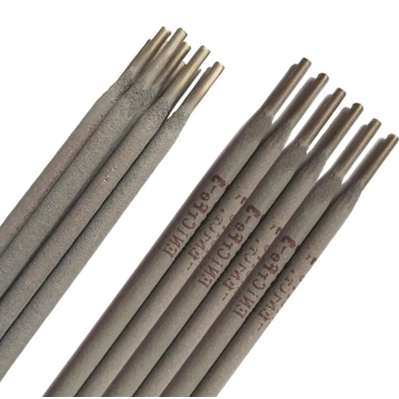 ERNiCrMo-3
 ERNiCrMo-4
 ERNiCrFe-7
 ERNiCrFe-7A
 ERNiCrMo-10
 ERNiCrCoMo-1
 ERNiFeCr-2
 ERNiFeCr-1
 ERNiMo-8
 ERNiCrMo-13
 ERNiCr-4
 ERNiCr-3
 ERNi-1
 Haynes-25
 Hayness-188
 MP35N
 Refractory 26
 Waspaloy alloy
 17-4PH
 17-7PH
 904L
 Nitronic 50
 Nitronic 60
 AL-6XN
 F55
 PH 13-8
 Haynes-230
 Nickel 200
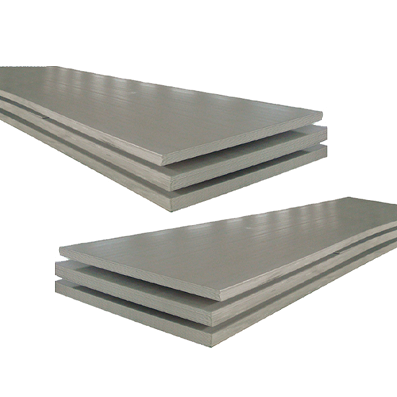 Sheet & Plate
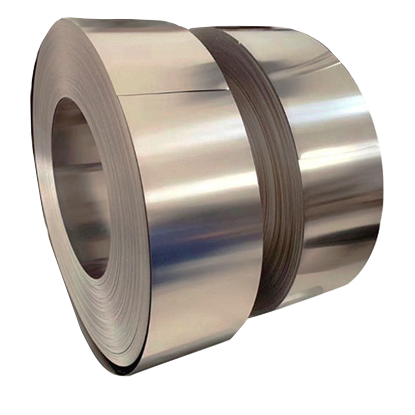 Strip & Foil
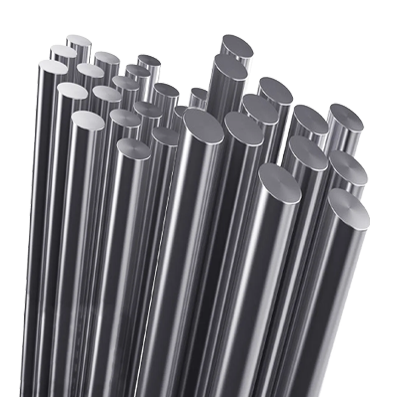 Bar & Rod
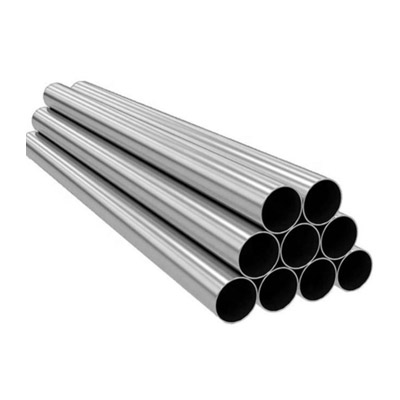 Pipe & Tube
 Bolts & Fasteners
 Flange & Ring
 Nickel Alloy Powder


Hastelloy X vs. Haynes 188: Key Differences, Properties, Applications and How to Choose
1. Introduction
Hastelloy X and Haynes 188 are high-performance alloys designed for demanding high-temperature environments. Both offer excellent oxidation resistance, high-temperature strength, and good fabrication characteristics. They are widely used in aerospace, gas turbines, industrial furnaces, and high-temperature processing equipment.
Despite their similar applications, these alloys have important differences in chemical composition, mechanical properties, and performance under prolonged thermal exposure.
Hastelloy X is a nickel-based alloy containing chromium, iron, and molybdenum. Haynes 188 is a cobalt-based alloy containing chromium, nickel, and tungsten, with a small addition of lanthanum to improve oxidation resistance.
Understanding these differences helps engineers and purchasing professionals select the right material for their specific operating conditions.
chemical environments.
3. Advantages of Hastelloy X Compared with Haynes 188
3.1 Excellent Resistance to Different High-Temperature Atmospheres
One of the most important advantages of Hastelloy X is its ability to perform in oxidizing, reducing, and neutral furnace atmospheres under suitable operating conditions.
Its chromium content helps form a protective oxide layer, while molybdenum contributes to its overall high-temperature properties.
This combination makes Hastelloy X suitable for industrial furnaces and thermal processing equipment where atmospheric conditions may vary.
Typical applications include furnace rolls, retorts, muffles, baffles, and heat-treatment fixtures.
Haynes 188 also offers excellent oxidation resistance and good resistance to certain hot-corrosion and sulfidation environments. Therefore, the advantage of Hastelloy X is not universal; the better material depends on the actual furnace atmosphere, temperature, and exposure duration.
3.2 Good Resistance to Carburizing Environments
Carburization occurs when carbon enters a metal at elevated temperatures, potentially changing its microstructure and mechanical properties.
Hastelloy X offers good resistance to carburizing environments under suitable conditions. This can be important for industrial furnaces and chemical processing equipment exposed to carbon-rich gases.
The alloy is also used in selected environments where resistance to reducing atmospheres is required.
For equipment operating under carburizing conditions, Hastelloy X should be evaluated against the specific gas composition, temperature, carbon activity, and expected service life.
3.3 Excellent Fabrication and Welding Characteristics
Hastelloy X has excellent forming and welding characteristics.
It can be fabricated using suitable hot-working, cold-forming, and welding processes. This makes it useful for manufacturing complex components that require forming, joining, and dimensional control.
Typical fabricated components include:
Combustion liners.
Transition ducts.
Furnace baffles.
Retorts and muffles.
High-temperature ducts and housings.
Heat-treatment fixtures.
Haynes 188 can also be readily formed and welded. Therefore, Hastelloy X should not automatically be considered easier to fabricate in every situation. The preferred alloy depends on the component design, forming process, welding procedure, and required final properties.
3.4 Good Resistance to Stress-Corrosion Cracking in Certain Petrochemical Environments
Hastelloy X has demonstrated excellent resistance to stress-corrosion cracking in certain petrochemical applications.
Stress-corrosion cracking can occur when a susceptible material experiences tensile stress in a particular corrosive environment.
The ability of Hastelloy X to resist this type of damage can be valuable in selected chemical processing and petrochemical applications.
However, stress-corrosion cracking resistance depends on the chemical medium, temperature, stress level, and material condition. Neither Hastelloy X nor Haynes 188 should be selected solely on the basis of a general corrosion-resistance statement.
3.5 Established Performance in Industrial Gas Turbines
Hastelloy X has a long history of use in industrial gas turbines and aircraft engine components.
It offers a practical combination of high-temperature strength, oxidation resistance, and fabrication characteristics.
For industrial gas turbine manufacturers and maintenance companies, Hastelloy X can be an attractive choice when its properties meet the original equipment design requirements.
Its established use in combustion and exhaust components can also simplify material selection for replacement parts, provided the original specifications and qualification requirements are satisfied.
3.6 Potential Cost Advantages in Suitable Applications
Material cost is an important consideration in high-temperature engineering projects.
Hastelloy X is nickel-based and contains a significant amount of iron, whereas Haynes 188 is cobalt-based and contains a substantial amount of tungsten.
These differences affect raw material costs and market exposure. In some purchasing situations, Hastelloy X may offer a more economical solution.
However, neither alloy is always cheaper. Actual prices depend on current nickel, cobalt, and tungsten markets, product form, dimensions, processing requirements, order quantity, and availability.
Buyers should compare quotations for equivalent product specifications and delivery conditions before making a decision.
4. Applications of Hastelloy X
Hastelloy X is widely used in industries that require a combination of high-temperature strength, oxidation resistance, and fabrication capability.
4.1 Aerospace and Aircraft Engines
Hastelloy X is used in selected high-temperature aircraft engine components.
Typical applications include:
Combustion cans and liners.
Transition ducts.
Spray bars.
Flame holders.
Afterburner components.
Exhaust components.
Cabin heating systems.
Its combination of strength, oxidation resistance, and fabrication characteristics makes it suitable for these applications when the operating conditions fall within the relevant design limits.
4.2 Industrial Gas Turbines
Industrial gas turbines expose components to high temperatures, combustion gases, and thermal cycling.
Hastelloy X is used in fabricated combustion and exhaust components, including:
Combustor liners.
Transition ducts.
Injector nozzles and spray bars.
Flame holders.
Exhaust struts.
Other hot-gas-path components.
It is particularly useful when designers require a balance of high-temperature performance, oxidation resistance, and fabricability.
4.3 Industrial Furnaces and Heat-Treatment Equipment
Industrial furnaces are one of the important application areas for Hastelloy X.
Typical components include:
Furnace rolls.
Retorts and muffles.
Furnace baffles.
Heat-treatment trays and fixtures.
High-temperature supports.
Flash-dryer components.
The alloy is particularly useful in equipment exposed to oxidizing, reducing, or neutral atmospheres, provided the specific operating conditions are suitable.
4.4 Chemical and Petrochemical Processing
Hastelloy X can be used in selected high-temperature chemical processing applications.
Examples include:
Catalyst support grids.
Pyrolysis tubing.
Chemical processing furnace components.
High-temperature retorts.
Selected components exposed to aggressive process gases.
The alloy's suitability must be confirmed for the actual chemical environment, especially when corrosive gases, carbon-rich atmospheres, or complex mixtures are present.
5. When Should You Choose Hastelloy X Instead of Haynes 188?
Hastelloy X may be the preferred option in the following situations.
Situation 1: Industrial Furnace Applications
Choose Hastelloy X when you need a heat-resistant alloy for furnace rolls, retorts, muffles, baffles, or heat-treatment fixtures.
Its established performance in different furnace atmospheres makes it a strong candidate for many industrial heating applications.
Situation 2: Resistance to Carburizing Conditions Is Important
Hastelloy X should be considered when components operate in carbon-rich gases or other environments where carburization is a concern.
The final decision should be based on the specific atmosphere, temperature, and exposure duration.
Situation 3: Resistance to Certain Petrochemical Environments Is Required
If stress-corrosion cracking is a concern, Hastelloy X may be suitable for selected petrochemical applications.
The exact chemical medium and operating conditions must be evaluated before confirming material compatibility.
Situation 4: The Existing Equipment Design Specifies Hastelloy X
For maintenance projects and replacement components, retaining Hastelloy X may be the most practical option when the original design, qualification documents, and operating history support its continued use.
Changing to Haynes 188 requires an engineering assessment and approval.
Situation 5: A Cost-Effective High-Temperature Material Is Needed
Hastelloy X may be economically attractive when its properties satisfy the design requirements without requiring a different alloy.
The purchase decision should consider total cost, service life, fabrication, availability, and replacement frequency rather than the initial price alone.
6. Advantages of Haynes 188 Compared with Hastelloy X
6.1 Superior Resistance to Sulfate-Deposit Hot Corrosion
One of the most important advantages of Haynes 188 is its excellent resistance to sulfate-deposit hot corrosion.
Hot corrosion can occur when molten or partially molten deposits containing salts attack a metal surface at elevated temperatures. In gas turbines, these deposits may originate from fuel impurities or airborne contaminants.
Haynes 188 is particularly attractive for components exposed to combustion gases and salt-containing deposits.
In a published Haynes International comparison test conducted at 900°C (1650°F) for 1,000 hours under specified burner-rig conditions, Haynes 188 showed less metal loss than Hastelloy X.
This makes Haynes 188 a strong candidate for selected gas turbine and aerospace components where sulfate-deposit hot corrosion is a major concern.
Actual performance depends on the fuel composition, deposit chemistry, temperature, gas velocity, and operating cycle.
6.2 Excellent High-Temperature Strength
Haynes 188 offers excellent mechanical strength at elevated temperatures.
Its cobalt-based composition and substantial tungsten content contribute to its high-temperature strength and resistance to deformation under sustained loading.
This is particularly important for components that must maintain their shape and structural integrity during prolonged exposure to heat.
Typical applications include combustion liners, transition ducts, afterburner components, and other high-temperature engine parts.
Hastelloy X also provides excellent high-temperature strength. Therefore, the selection should be based on comparative mechanical-property data at the actual operating temperature and stress level rather than assuming that Haynes 188 is always stronger.
6.3 Excellent Oxidation Resistance at Elevated Temperatures
Haynes 188 provides very good resistance to oxidation in air and combustion-gas environments.
Its chromium content promotes the formation of a protective oxide layer, while lanthanum helps improve oxide-scale adherence and stability.
According to Haynes International, Haynes 188 can be used for prolonged exposure to oxidizing environments at temperatures up to approximately 1095°C (2000°F), subject to service conditions.
In the manufacturer's published comparative oxidation data, Haynes 188 showed lower metal loss than Hastelloy X under certain cyclic burner-rig conditions at 1095°C.
However, the relative performance varies with the test environment. For example, different results can occur under static oxidation, cyclic oxidation, or water-vapor-containing atmospheres.
Both alloys offer excellent oxidation resistance, so the choice should be based on data relevant to the intended service environment.
6.4 Excellent Resistance to Gaseous Sulfidation
Haynes 188 also offers good resistance to gaseous sulfidation under suitable conditions.
Sulfidation occurs when sulfur-containing gases react with a metal at elevated temperatures, potentially causing material loss and surface degradation.
This property can be useful in selected industrial heating and combustion applications where sulfur-containing gases are present.
For equipment exposed to sulfur-bearing process gases, engineers should evaluate the exact gas composition, temperature, pressure, and exposure duration before choosing between Haynes 188 and Hastelloy X.
6.5 Excellent Resistance to Molten Chloride Salts
Another advantage of Haynes 188 is its reported resistance to molten chloride salts under appropriate conditions.
This characteristic may be relevant to specialized thermal processing and high-temperature systems involving chloride-containing materials.
However, molten-salt corrosion is highly dependent on salt composition, impurities, temperature, and material condition.
Haynes 188 should not be assumed to resist every molten chloride mixture. Testing or reliable service data for the specific environment is recommended before material selection.
6.6 Good Fabrication and Welding Characteristics
Haynes 188 combines high-temperature performance with good fabrication characteristics.
It can be formed using conventional hot-working and cold-working processes and can be welded using suitable procedures.
Common welding methods include gas tungsten arc welding, gas metal arc welding, electron-beam welding, and resistance welding.
These characteristics are important when manufacturing complex aerospace components that require precise forming and reliable welded joints.
Haynes 188 work-hardens during cold forming, so intermediate annealing may be necessary for complex forming operations. Proper heat treatment is also important for restoring the desired material properties.
Hastelloy X also has excellent fabrication and welding characteristics. Therefore, fabrication requirements should be evaluated for the actual component rather than treating one alloy as universally easier to manufacture.
7. Applications of Haynes 188
Haynes 188 is widely used in demanding aerospace and high-temperature applications where oxidation resistance, hot-corrosion resistance, and mechanical strength are important.
7.1 Aerospace Engines
Aerospace applications are among the most important uses of Haynes 188.
Typical components include:
Combustion cans and liners.
Transition ducts.
Afterburner components.
Flame holders.
Exhaust-system components.
Selected high-temperature engine structures.
These components experience high temperatures, thermal cycling, and exposure to combustion gases. Haynes 188 provides a useful combination of mechanical strength, oxidation resistance, and hot-corrosion resistance.
7.2 Industrial Gas Turbines
Industrial gas turbines operate under demanding thermal and mechanical conditions.
Haynes 188 can be used in selected components such as:
Combustor liners.
Transition ducts.
Combustion-zone components.
Flame holders.
Selected exhaust components.
Its resistance to sulfate-deposit hot corrosion can be especially valuable where fuel impurities or salt-containing deposits are significant concerns.
7.3 Afterburner and Exhaust Systems
Afterburner and exhaust components can experience high temperatures, rapid thermal changes, and aggressive combustion-gas environments.
Haynes 188 is suitable for selected components where a combination of oxidation resistance and high-temperature mechanical properties is required.
The alloy's suitability depends on the component's operating temperature, mechanical stress, cooling design, and expected service life.
7.4 Industrial High-Temperature Equipment
Haynes 188 can also be considered for selected industrial applications involving prolonged high-temperature exposure.
Potential applications include:
High-temperature burner components.
Combustion-system parts.
Heat-resistant structural components.
Selected furnace internals.
Components exposed to corrosive combustion gases.
For industrial furnaces, the choice between Haynes 188 and Hastelloy X should be based on the furnace atmosphere, thermal cycle, mechanical loading, and cost requirements.
8. When Should You Choose Haynes 188 Instead of Hastelloy X?
Haynes 188 may be the preferred material in the following situations.
Situation 1: Excellent Hot-Corrosion Resistance Is Required
Choose Haynes 188 when sulfate-deposit hot corrosion is a major design concern.
This is particularly relevant to selected gas turbine and aerospace components exposed to combustion gases and salt-containing deposits.
Its documented performance in specific hot-corrosion tests makes it an attractive candidate for these environments.
Situation 2: The Component Operates Under Prolonged High-Temperature Conditions
Haynes 188 is designed for high-temperature service and offers excellent strength and oxidation resistance.
It can be considered for components that must maintain structural integrity during prolonged exposure to hot gases.
The final choice should be based on stress-rupture data, creep requirements, and the actual operating temperature.
Situation 3: Resistance to Oxidizing Combustion Gases Is Essential
Haynes 188 is suitable for applications exposed to oxidizing air and combustion gases at elevated temperatures.
Its chromium content and lanthanum addition help maintain a protective oxide scale under suitable conditions.
Where oxidation is the primary material-selection concern, compare test data for both alloys at the relevant temperature and exposure duration.
Situation 4: Sulfur-Containing Gases Are Present
Consider Haynes 188 when the service environment contains sulfur-bearing gases and resistance to gaseous sulfidation is important.
However, the alloy's suitability must be verified for the specific gas mixture and operating conditions.
Situation 5: The Original Equipment Design Specifies Haynes 188
For aerospace engines, gas turbines, and other engineered systems, the original material specification is an important selection criterion.
If the design specifies Haynes 188, using the same alloy for replacement parts can simplify qualification and maintain consistency with the original engineering requirements.
Substitution with Hastelloy X should only occur after the responsible engineering team approves the change.
RFQ.
- Q: What are the UNS numbers for Haynes 188 and Hastelloy X?
A: Haynes 188 is UNS R30188, while Hastelloy X is UNS N06002. - Q: Which alloy has better hot-corrosion resistance?
A: Haynes 188 generally offers better resistance to sulfate-deposit hot corrosion under specific test conditions. - Q: Which alloy has better oxidation resistance?
A: Both have excellent oxidation resistance. Haynes 188 performs better under certain high-temperature test conditions. - Q: What are the main applications of Haynes 188?
A: Aerospace engines, gas turbines, combustion liners, afterburners, and exhaust components. - Q: Can Haynes 188 replace Hastelloy X?
A: Yes, in some applications, but operating conditions, mechanical properties, and material specifications must be verified before substitution.
9. Conclusion
Haynes 188 and Hastelloy X are both high-performance alloys designed for demanding high-temperature service.
Haynes 188 offers several important advantages, particularly its excellent resistance to sulfate-deposit hot corrosion, good resistance to gaseous sulfidation, and strong performance in selected aerospace and gas turbine applications.
It is an excellent candidate for combustion components and other parts exposed to prolonged high temperatures and aggressive combustion gases.
Hastelloy X remains a valuable alternative because of its excellent oxidation resistance, good fabrication characteristics, and established use in industrial furnaces and chemical processing equipment.
The best choice depends on the actual operating environment, mechanical loading, design requirements, and total cost of ownership.
When purchasing Haynes 188 or Hastelloy X bars, plates, sheets, strips, or other product forms, buyers should confirm the UNS number, applicable material specification, dimensions, heat treatment, mechanical properties, and material test certificate requirements before placing an order.